From
mosaic grasslands and dense sal forests
to swampy marshes, the terrain of Dudh wa
National Park is as diverse as the wildlife
population it harbors. While the northern
edge of the Park lies along the Indo-Nepal
border, the River Suheli marks the southern
boundary.
A
Tiger Reserve since 1879, Dudhwa became
a National Park in 1977 and adopted the
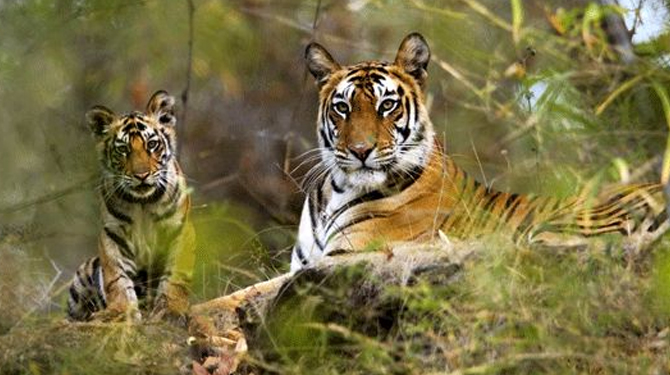
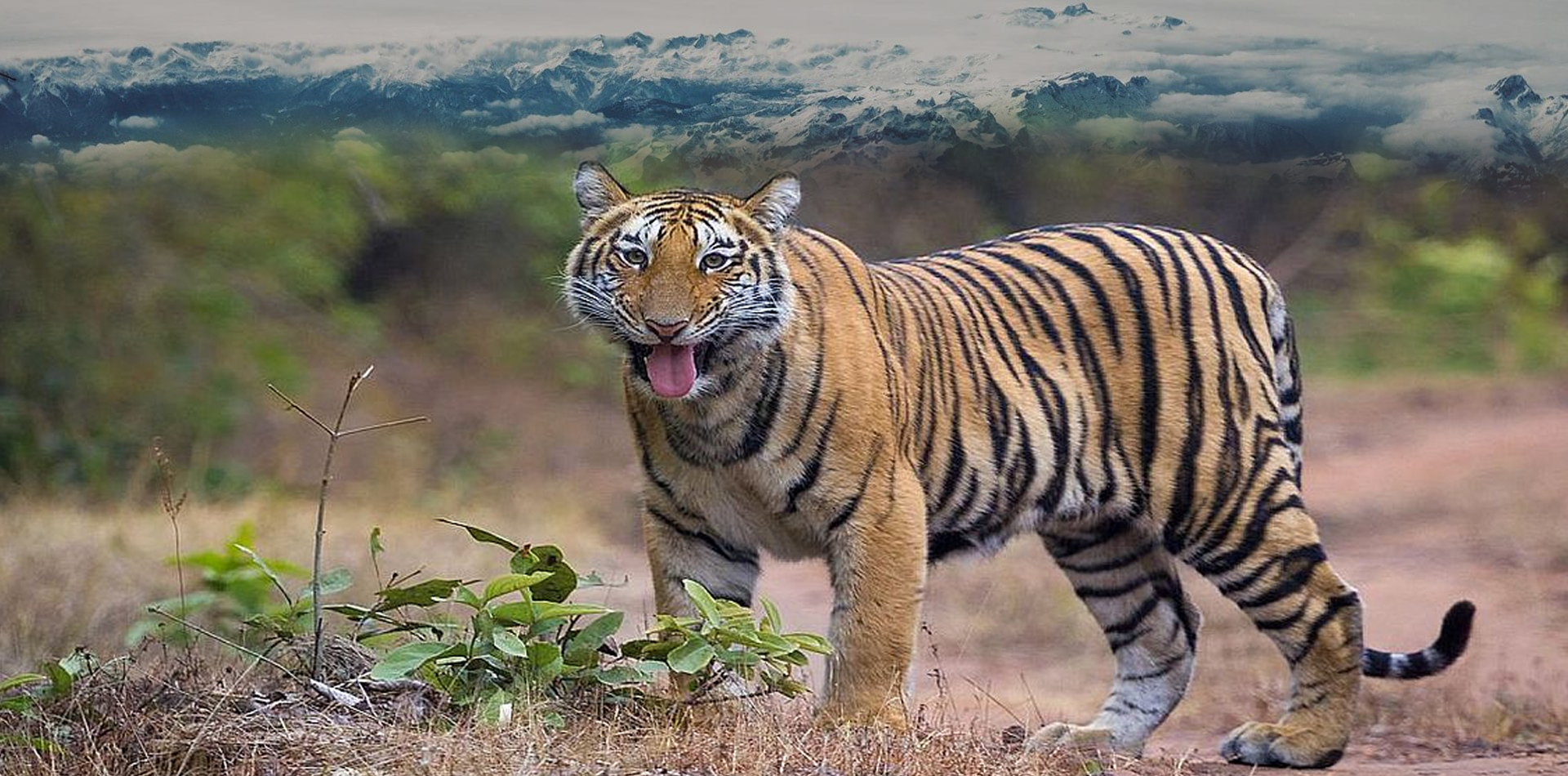
Project Tiger in 1988. Although the Tigers
at the Park are numerous, sightings are
rare due to the thick forest cover of the
area. Besides Tigers, Leopards, Hispid Hares,
Swamp Deer (Barasingha) and Rhinos thrive
amidst the vegetation.
Wildlife Attractions
in Dudhwa National Park
Apart from the
swamp deer, there are at least 37 species
of mammals and 16 species of reptiles. Dudhwa
Wildlife Sanctuary is said to have 101 tigers
and four leopards. Recently, the hispid
hare has also been spotted in the area.
It
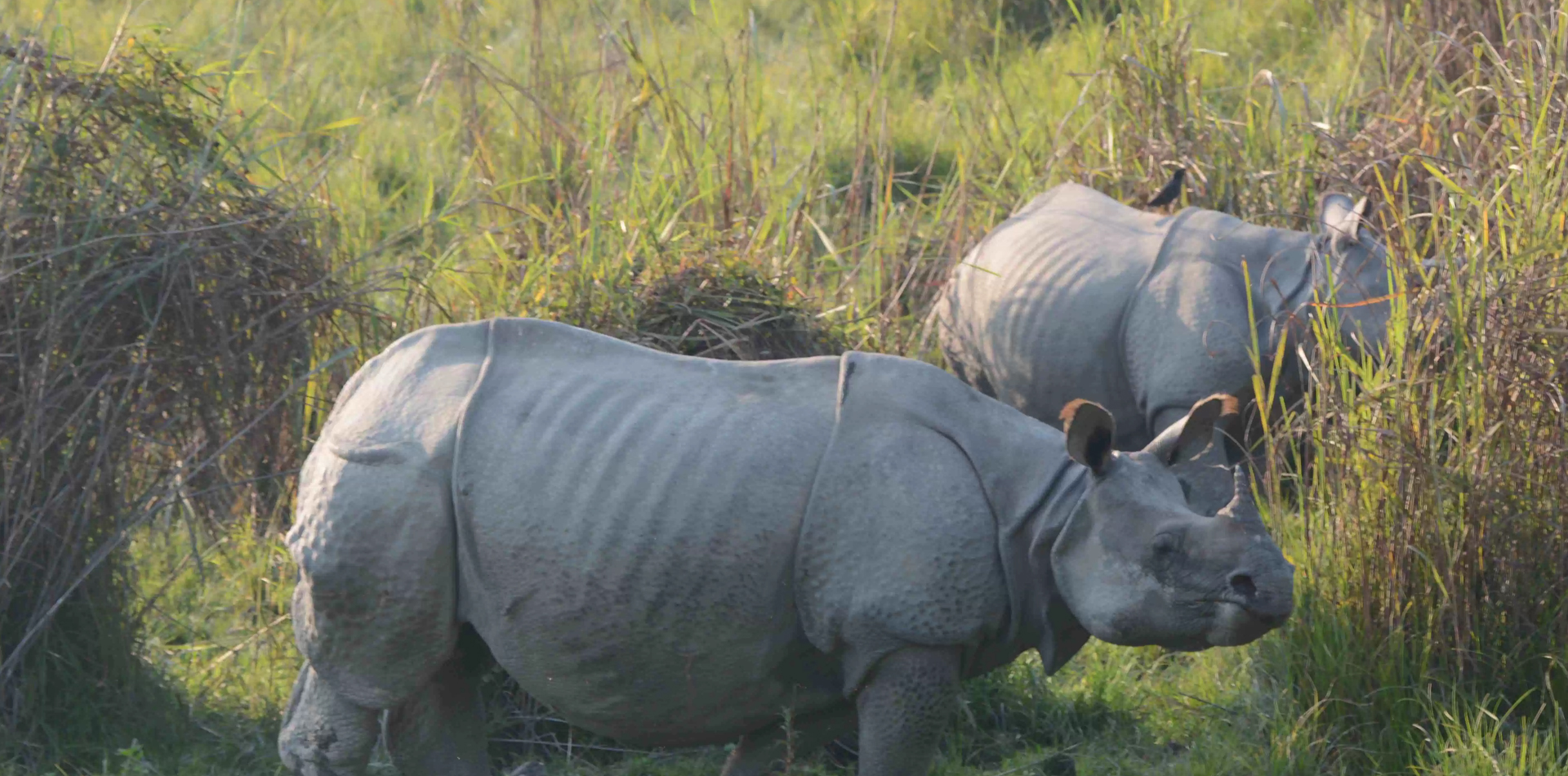
was here in 1984 that a major rhinoceros
rehabilitation project was started since
these forests had been the habitat of the
rhinoceros 150 years ago. Five rhinos were
relocated from Assam but two of the females
died due to the strain of transportation.
These were replaced in 1985 by four more
females from Nepal.
Dudhwa's
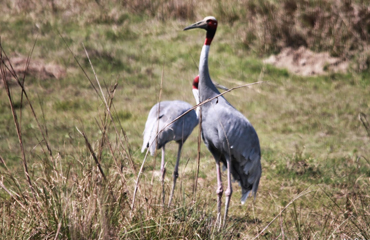
birds, in particular, are a delight for
any avid bird watcher. The marshlands are
especially inviting for about 400 species
of resident and migratory birds including
the Swamp Partridge, Great Slaty Woodpecker,
Bengal Florican, plenty of painted storks,
sarus cranes, owls, barbets, woodpeckers,
minivets and many more. Much of the park’s
avian fauna is aquatic in nature, and is
found around Dudhwa’s lakes- especially
Banke Tal.
The
major vegetation types in this region are
tropical semi-evergreen forest, tropical
moist deciduous forest, riparian and swamp
forest and dry deciduous forest. The dominant
tree species are Shorea robusta, Terminalis
tomentosa, Adina cordifolia, Terminalia
belerica, Eugenia jambolana, Dalbergia sissoo,
and Bombax malabaricum. The various types
of forests throughout the park are interrupted
by wide stretches of mesophyllous grasslands
locally called the phantas.
Safaris
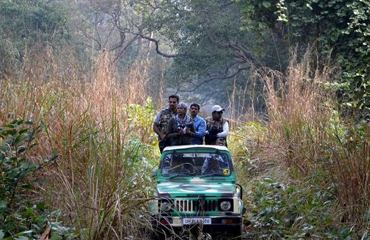
The forest provides
no jeep safaris or guides. Jeeps and mini
buses can be hired to move around inside
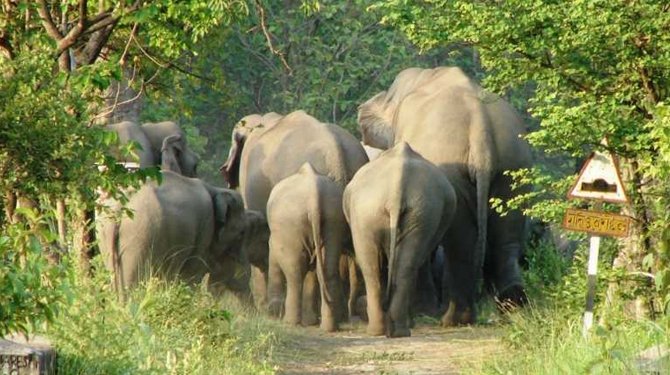
the park. Elephant rides through the Park
are also available and moreover the mahouts
or Elephant drivers also double up as guides.

Other Attractions
The park
is conveniently located at an easily approachable
distance from all the major tourist attractions
of the state. Travel to the historic city
of Lucknow or pay a visit to the shimmering
water of the Ganga at Varanasi. You can
also visit Agra, home of the Taj Mahal.
How to Get there
Air
: Lucknow is the most convenient
airport. Indian Airlines operates a number
of flights to Lucknow from major cities
across the country. The timings of flights
from Delhi are 9:30 (except Tuesday), 10:00
(Tuesday), 16:05 (throughout the week) and
17:30 (Wed, Fri, Sun). Air Sahara flies
from Mumbai to Lucknow at 19:30. Outside
India, Nepal at 35 kms is the nearest airport.
Rail
: The nearest railheads are Dudhwa
(4 kms), Palia (10 kms) and Mailani (37
kms), however the most convenient way would
be to travel to Lucknow (conveniently connected
to most of the Indian cities) and hit the
road or take a train to any of the nearer
stations from there. Some of the important
daily
trains from Delhi to Lucknow are Kaifiyat
Exp. (19:25), Lucknow Mail (22:00), Shramjeni
N Exp. (13:15), Vaishali Exp. (19:50), Gorakdam
Exp. (20:15), Sapt Kranti Exp. (16:45) and
Bihar S Kranti (14:40). Other daily Mumbai-Lucknow
trains are Kushinagar Exp. (22:55) and Pushpak
Exp. (8:20).
Road
: The State Roadways buses and private
bus services link Palia to Lakhimpur Kheri,
Shahjahanpur, Bareilly and Delhi. Buses
are frequent between Palia and Dudhwa. The
most convenient way to travel to the park,
if you are coming in from India, is to make
your way to Lucknow, either by air or by
rail and take a bus or train to Dudhwa,
which is just 4 km from the entry gate of
the park. For foreign tourists looking to
start their journey of India from Dudhwa,
it is advisable to travel to the Nepal airport
and take one of the number of transport
means available from there. To travel by
road from Delhi, take the NH24 to Shahjahanpur
via Ghaziabad, Moradabad, Rampur and Bareilly.
A district road from here will take you
to Dudhwa via Pawayan, Kutar, Mailani, Bhira
and Palia.
Distances from Major
Cities
Lucknow :
182 km (NW)/ 4 hrs.
Ramnagar :
50 km
Delhi : 410
km (E)
Mumbai : 1277
km
Bangalore :
1697
Travel Tips/Important
Information
» The park
charges include Entry Fee : Rs. 50, Vehicle
Entry Fee : Rs. 150.
» Park timings are
from 7 to 10 AM and 3 to 6 PM.
» The best point
to start your park trip is at the Dudhwa
Forest Office, where you
can get information from the
foresters about everything ranging from
accommodation to safaris.The
entire park is administratively divided
into nine ranges of which
only Sathiana, Bankati, Sonaripur, Salukhapur,
Belrayan and Kila have
accommodation facilities.
» Elephants can be
hired from the office near the park gate
or from the Salukhapur
Chowki for Rs.100/head for
about 3 hours.
» A library at the
Dudhwa office provides information about
the park. A nature shop located near by
sells books and
other souvenirs.
» All visitors to
the park require an entry permit, which
can be obtained from the director
of the park, district
headquarters, Lakhimpur-Kheri.
|